
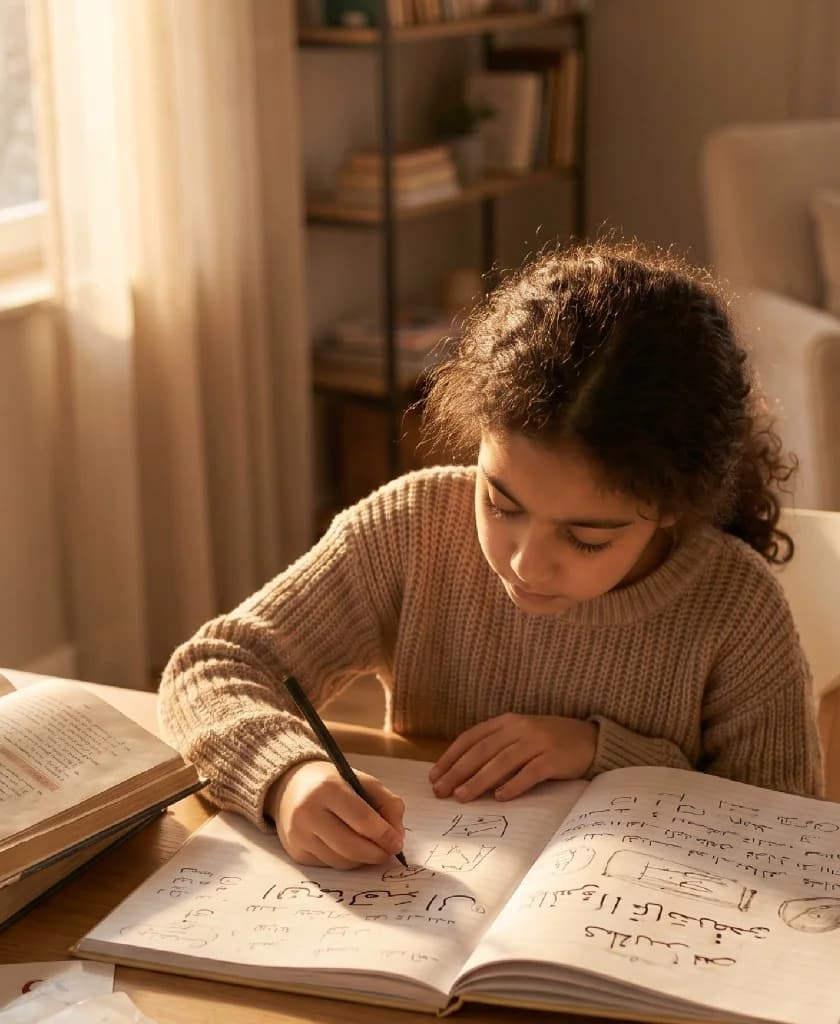
Does gender grouping affect your child's confidence in online Islamic classes? Explore research and practical tips for Muslim parents.
When you enroll your child in an online Islamic class, one of the first questions you face is whether to choose a mixed or single-gender environment. Many Western Muslim parents wrestle with this decision, balancing Islamic values of modesty with the desire to raise confident, well-rounded children. This guide synthesizes general educational research with Islamic principles to help you understand how private 1:1 class sizes and intentional gender grouping in online classes impact your child's confidence.
The Pedagogy of Participation: How Children Learn Online
Live online classes are not just digital copies of physical classrooms. They have unique dynamics that affect how children participate and learn. In a typical online class, each child is a small square on a screen, and the teacher's attention is shared among all. However, the online medium can also be a great equalizer: quieter students who might be overshadowed in a physical classroom often find it easier to speak up when they are at home in their own comfortable space.
But participation doesn't happen automatically. It depends on several factors:
- Class size: Smaller groups mean more opportunities for each child to speak.
- Teacher's approach: Skilled tutors use interactive methods to draw out every student.
- Peer dynamics: The mix of personalities and genders can influence who feels comfortable volunteering.
At Minhaj Kids, we have found that small live groups of one child per class are ideal. In such groups, every child is seen and heard. This is especially critical for subjects like Quran recitation, where a child must be willing to make mistakes in front of others to improve. For more on why private 1:1 classes work, see our article on why private 1:1 classes work better.
What Educational Research Says About Single-Gender vs. Mixed Classes
Broad educational research shows that academic achievement differences between mixed and single-gender classes are statistically minimal. However, single-gender environments can reduce social anxiety and boost participation for certain demographics, particularly as children enter adolescence (Our Kids, 2026). For example, some girls may feel more confident answering questions without the presence of boys, and some boys may feel less self-conscious about making mistakes in front of girls.
Yet these findings come from traditional physical schools, not online micro-classrooms. The online context changes the equation. The "screen effect" can level the playing field, making gender dynamics less pronounced than in physical classrooms. However, if classes are too large, participation gaps can still emerge, with some children dominating the conversation while others fade into the background.
For Muslim parents, the decision is not just about academic outcomes but also about fostering a sense of comfort and modesty. In a small online class, the gender mix can be managed intentionally to create a safe space where children feel at ease, especially as they approach adolescence. If you're also weighing other educational models, our comparison of weekend mosque, Islamic school, and online options may help.
Age and Stage: Navigating Islamic Guidelines for Pre-Teens
Islamic guidelines generally accommodate mixed learning for pre-pubescent children (under 10) provided the environment is supervised and modest. As children approach puberty, single-gender environments are often preferred to align with Islamic etiquette and reduce distractions.
This does not mean that mixed classes are forbidden for younger children. In fact, many Islamic schools and co-curricular programs for young children are mixed, and this can have social benefits. However, parents should be mindful of the age and maturity of their child. A 7-year-old and a 12-year-old have very different needs.
Minhaj Kids offers flexible class placements that respect both developmental stages and Islamic guidelines. For children under 10, you can choose mixed classes if you wish. For older children, single-gender classes are available. This flexibility allows you to align your child's learning environment with your family's values. To understand how other families navigate these decisions, you might read about raising Muslim children in the West.
The "Screen Effect": Does Online Learning Change the Gender Dynamic?
In a physical classroom, gender dynamics can be intense. Boys and girls may compete for attention, or some may feel inhibited by the presence of the opposite gender. Online, the physical distance can reduce these dynamics. Children are in their own homes, often with a parent nearby, which can increase their comfort level.
However, the screen does not eliminate all gender effects. For example, a shy girl might still feel less inclined to read aloud in Tajweed (تجويد) class if she is aware that boys are listening. Similarly, a boy might feel embarrassed to make a mistake in front of girls. This is where intentional grouping becomes valuable.
Some studies suggest that online learning can actually increase participation for students who are typically quiet (arXiv, 2026). The chat feature and the ability to raise a virtual hand can give shy students more confidence. But this only works if the teacher actively encourages participation and if the group size is small enough that no one can hide. For more on the benefits and risks of screen-based learning, see our guide on screen-based Islamic learning.
Vulnerability in Learning: Why Quran and Tajweed Require Safe Spaces
Quran classes require a high level of vulnerability. Children must recite aloud, and the teacher may correct their pronunciation, which can be embarrassing. For a child to improve in Tajweed (تجويد), they need to feel safe making mistakes. This is where gender grouping can matter.
For some children, a single-gender space feels safer for this specific task. A girl might feel more comfortable experimenting with her voice without the presence of boys, and a boy might feel less self-conscious about being corrected in front of girls. However, this is not universal. Some children are more confident in mixed settings.
At Minhaj Kids, we understand that the subject matter influences the ideal environment. Our Quran classes are structured to minimize anxiety, whether in a mixed or single-gender setting. We also offer specialized support for shy children, as discussed in our article on helping shy children participate in online Quran classes. Additionally, our approach to Tajweed instruction is detailed in why Tajweed instruction fails diaspora kids.
Why Class Size Often Matters More Than Gender Grouping
While gender grouping can influence confidence, class size is often the ultimate driver of participation. In a large class, even a single-gender environment can be intimidating because there are more peers to impress. In a private 1:1 class of one child per class, every child gets a turn, and the teacher can notice when someone is quiet.
Research supports the benefits of private 1:1 class learning. A study on arXiv found that smaller class sizes lead to better student engagement and achievement (Cornell University, 2026). This is especially true in online settings, where attention spans are shorter and distractions are more numerous.
Minhaj Kids prioritizes private 1:1 classes because we know that a child's confidence grows when they are not just a face in the crowd. Our tutors are trained to encourage participation from every student, and they use interactive tools to keep lessons engaging. For more on how to build a consistent learning routine, see how to build a consistent Quran routine.
Choosing the Right Environment for Your Child's Personality
Every child is unique. Some are naturally outgoing and thrive in mixed groups; others are more reserved and may feel more comfortable in a single-gender setting. As a parent, you know your child best. Here are some questions to consider:
- Does your child tend to be shy or outgoing?
- How does your child respond to peer feedback?
- What is your child's age and maturity level?
- What subject are they studying? Quran recitation might require a different environment than Islamic Studies.
It's also important to remember that your child's needs may change over time. A child who is confident in a mixed class at age 7 might prefer a single-gender class at age 11. Minhaj Kids allows you to change your child's class placement as they grow, ensuring that the environment always supports their confidence. If your child is particularly shy, you may also find our article on helping shy children participate useful.
How Minhaj Kids Structures Classes for Maximum Confidence
At Minhaj Kids, we have designed our online classes with your child's confidence in mind. Here's how we do it:
- Small live groups: We cap our classes at one child per class. This ensures that every child has ample opportunity to speak and ask questions.
- Flexible gender grouping: We offer both mixed and single-gender classes. For children under 10, you can choose either. For older children, single-gender options are available to align with Islamic guidelines.
- Subject-specific placements: We recognize that Quran recitation requires a different level of vulnerability than, say, Islamic Studies. Our tutors are trained to create a supportive atmosphere in every subject.
- Continuous assessment: We regularly check in with students and parents to ensure that the learning environment is meeting your child's needs. If a child seems withdrawn, we work with the family to find a better fit.
We also offer a range of programs, including Quran, Arabic, and Islamic Studies, all taught in private 1:1 classes. Our approach is rooted in the belief that a child's confidence is the foundation for lifelong learning. For more on our teaching philosophy, you might explore our article on building Islamic studies curricula.
Conclusion
Choosing between mixed and single-gender online Islamic classes is not about finding a one-size-fits-all answer. It's about understanding your child's unique personality and stage of development, and aligning that with Islamic values and educational best practices. While research shows that academic outcomes are similar, confidence and participation can be influenced by gender grouping, especially in vulnerable subjects like Quran recitation.
At Minhaj Kids, we believe that class size is often more important than gender grouping. Private 1:1 classes ensure that every child is seen and heard, regardless of the gender mix. We offer flexible options that respect both Islamic guidelines and your child's comfort.
If you're unsure which environment is best for your child, we encourage you to contact us for a consultation. We're here to help you make an informed decision that supports your child's growth. You can also read more about online Islamic education and community to see how these choices fit into the bigger picture.
Ready to give your child the confidence to thrive? Explore our fees and enrollment options today. If you're still exploring, you might also find our article on top questions Western Muslim parents ask helpful.
References
- Our Kids: The Trusted Source for Schools and Camps — Our Kids, 2026.
- SeekersGuidance: The Global Islamic Seminary — SeekersGuidance, 2026.
- arXiv Open Access Archive — Cornell University, 2026.
- PAREF Schools — PAREF, 2026.
- Al-Salam Institute — Al-Salam Institute, 2026.
Disclaimer: This article provides educational guidance and is not a religious ruling. Please consult qualified scholars for specific Islamic questions.