
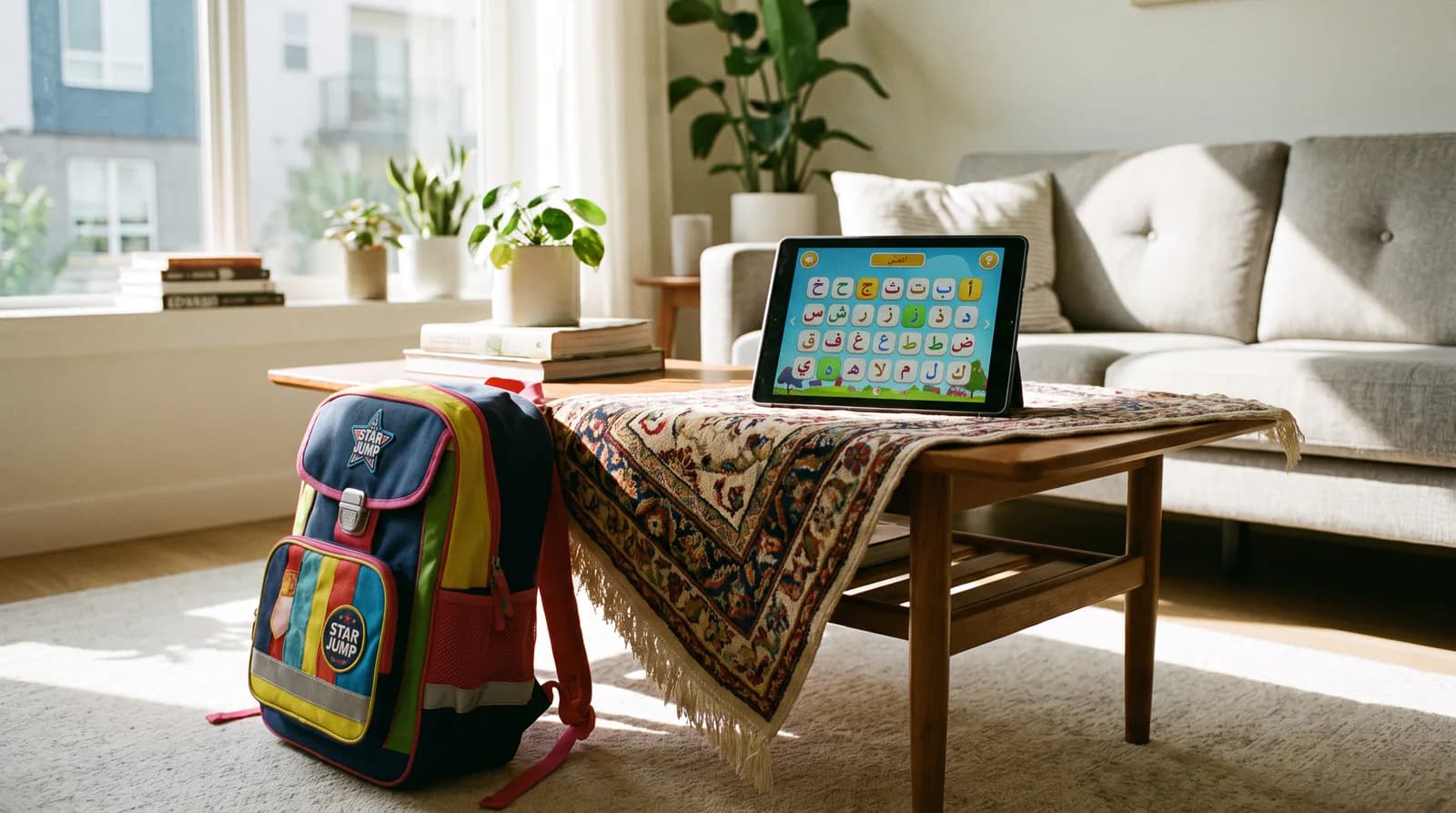
A deep guide for Muslim parents in the West on navigating identity challenges. Learn how structured Islamic education builds confidence and a strong sense.
The Unique Context of the Western Muslim Child
Raising Muslim children in the West is both a profound blessing and a complex challenge. Unlike previous generations, our children grow up in a world where their faith is often a minority perspective, and the dominant culture can pull them in directions that conflict with Islamic values. As parents, we want them to be proud Muslims who thrive in their societies—but how do we achieve this without losing their Deen? The key lies in understanding the unique identity dynamics at play and providing structured, intentional support.
Research from the Institute for Social Policy and Understanding (ISPU) highlights that American Muslim youth often navigate a "double consciousness"—balancing the values of their faith community at home with the secular norms of school and wider society. This can lead to feelings of being a "third culture kid," not fully belonging to their parents' culture of origin nor completely accepted by the host country. However, this challenge also presents an opportunity: when children are equipped with a strong Islamic identity, they can integrate confidently without compromising their faith.
At Minhaj Kids, we believe that structured Islamic education is the cornerstone of this process. In this guide, we explore the challenges, the research-backed solutions, and practical steps to raise resilient, faithful Muslim children in the West.
Navigating the "Hybrid Identity" Challenge
The concept of hybrid identity is central to understanding the Western Muslim child. They are not simply "Muslims in the West" but are shaping a new, authentic expression of Islam that is both rooted in tradition and responsive to their environment. This can be empowering, but it also requires careful navigation.
The Risk of Fragmentation
Without a solid foundation, children may compartmentalize their lives: "Muslim" at home or in the mosque, and "Western" at school with friends. This fragmentation can lead to internal conflict and a weakened sense of self. A 2019 study in the Journal of Muslim Minority Affairs found that diaspora Muslim youth who lacked a coherent religious identity were more susceptible to peer pressure and mental health struggles. Conversely, those with a strong, well-integrated identity reported higher well-being.
Identity as a Protective Factor
This is where the good news comes in. Research consistently shows that a confident religious identity is not a barrier to integration but a protective factor. The American Psychological Association (APA) published a study in 2015 demonstrating that Muslim American adolescents with a strong Islamic identity had better psychological well-being and were better equipped to handle discrimination. In other words, the more grounded they are in their faith, the more resilient they become in the face of societal challenges.
As parents, our role is to help our children build this identity intentionally. This means moving beyond simply telling them to "be good Muslims" and instead providing the tools and environment for them to internalize Islamic values. Structured learning—whether through Quran, Arabic, or Islamic studies—gives children the language and concepts to articulate their faith confidently.
Why Structured Learning Anchors Faith Identity
One of the biggest pitfalls in Islamic education in the West is ad-hoc, inconsistent learning. Relying on random YouTube videos, occasional weekend school sessions, or sporadic parental lectures can leave children with a fragmented understanding of Islam. This chaos exacerbates the identity confusion we discussed earlier.
Building Blocks of Knowledge
Structured, progressive learning—like a curriculum aligned with classical sources such as Al-Azhar—provides the scaffolding children need. Instead of isolated facts, they build a coherent framework: Tawheed leads to Fiqh, which leads to Seerah, and so on. This gives them confidence in "knowing what they know." When a child can explain why they pray, the history behind Ramadan, or the logic behind Islamic ethics, their faith becomes part of their intellectual identity, not just a set of inherited practices.
At Minhaj Kids, our approach is designed to turn abstract faith concepts into tangible, building-block knowledge. For example, our Islamic studies curriculum for teens covers Aqeedah, Fiqh, Seerah, and contemporary issues in a structured sequence. This progressive method ensures that students not only learn but also retain and apply their knowledge.
Consistency and Routine
Children thrive on routine. A consistent schedule for Islamic learning—just like their secular school timetable—normalizes religious education. It becomes a non-negotiable part of their week, reducing resistance and increasing engagement. Research on habit formation shows that regular, predictable practice leads to deeper internalization. That's why we recommend building a consistent Quran routine and integrating Islamic learning into daily life.
Creating a "Third Space": Belonging Beyond Home and School
For Muslim children who are minorities in their secular schools, finding a peer group where faith is the norm—not the exception—is crucial. This is what we call a "third space": an environment beyond home and school where they can be their complete selves without code-switching.
The Power of Small Groups
Small-group Islamic classes provide exactly this. When children learn with peers who share their values, they experience a sense of belonging that is often missing in larger, diverse school settings. They can ask questions about Islam without fear of judgment, discuss challenges openly, and form friendships rooted in shared faith. This peer support is a powerful protective factor against negative influences.
At Minhaj Kids, we emphasize small-group learning because it fosters deeper connections and personalized attention. Students not only learn from their teacher but also from each other, building a community that extends beyond the classroom.
Beyond the Classroom
This sense of belonging can be reinforced through family routines and community involvement. Simple practices like praying together, reading Quran as a family, or attending mosque events create a cohesive identity. When children see that their faith is lived consistently at home and in the community, it bridges the gap between their Muslim and Western selves.
For parents struggling to find balance, our guide on homeschooling Muslim children in the West offers insights on integrating secular and Deen education seamlessly.
Moving from Preservation to Empowerment
Ultimately, our goal should not be to simply "preserve" our children's faith as if it were a fragile artifact. Instead, we must empower them to be confident Western Muslims who contribute positively to society while holding firm to their Deen. This shift in mindset is transformative.
Equipping for the Real World
Empowerment means preparing children to navigate real-world challenges—peer pressure, social media, questions about their identity—with Islamic principles as their compass. It means teaching them to articulate their beliefs respectfully, to engage with diverse perspectives without losing their own, and to see themselves as ambassadors of Islam in a pluralistic society.
Our article on Muslim teens and social media explores how a strong Islamic identity acts as a protective factor against negative online influences. Similarly, navigating faith and doubt provides a compassionate framework for teens who question their beliefs—a normal part of development that can be addressed through open dialogue and solid knowledge.
Practical Steps for Parents
- Invest in structured learning: Enroll your child in a progressive Islamic studies program that covers Aqeedah, Fiqh, Seerah, and Quran with a clear curriculum. Avoid random, inconsistent classes.
- Create a Muslim peer group: Facilitate friendships with other Muslim children through classes, playdates, and community events. This reinforces a sense of normalcy around faith.
- Model confident Islam: Let your children see you practicing Islam with joy and conviction. Answer their questions honestly and involve them in your own learning.
- Address challenges head-on: Talk about peer pressure, media influence, and identity questions proactively. Use stories from the Seerah to illustrate how the Prophet ﷺ and his companions navigated similar challenges.
- Celebrate their Western Muslim identity: Encourage them to be proud of both their faith and their citizenship. Show them examples of Muslims who have excelled in Western societies while maintaining their Deen.
For more detailed guidance, explore our blog posts on building love for Salah without pressure and raising children on the Quran.
Conclusion: A Call to Action
Raising Muslim children in the West is a journey, not a destination. It requires patience, intentionality, and a commitment to providing the best possible foundation for our children. The research is clear: a strong, structured Islamic identity is a gift that protects, empowers, and enriches their lives. By investing in quality Islamic education, creating supportive communities, and shifting our mindset from preservation to empowerment, we can raise a generation of confident, faithful, and contributing Western Muslims.
At Minhaj Kids, we are here to support you every step of the way. Our structured programs are designed to build knowledge, confidence, and belonging in a nurturing online environment. Explore our fees and programs to find the right fit for your family.
References
- American Muslim Youth: What It Means to Be Young and Muslim in America Today — Institute for Social Policy and Understanding (ISPU), 2019.
- The Role of Religion in the Lives of Diasporic Muslim Youth — Journal of Muslim Minority Affairs (Taylor & Francis), 2019.
- Religious Identity and Psychological Well-Being Among Muslim American Adolescents — American Psychological Association (APA), 2015.
- Muslims in America: Immigrants and those born in U.S. see life differently in some ways — Pew Research Center, 2018.
- Islamic Education in the West: Approaches to Learning and Teaching — Routledge, 2020.