
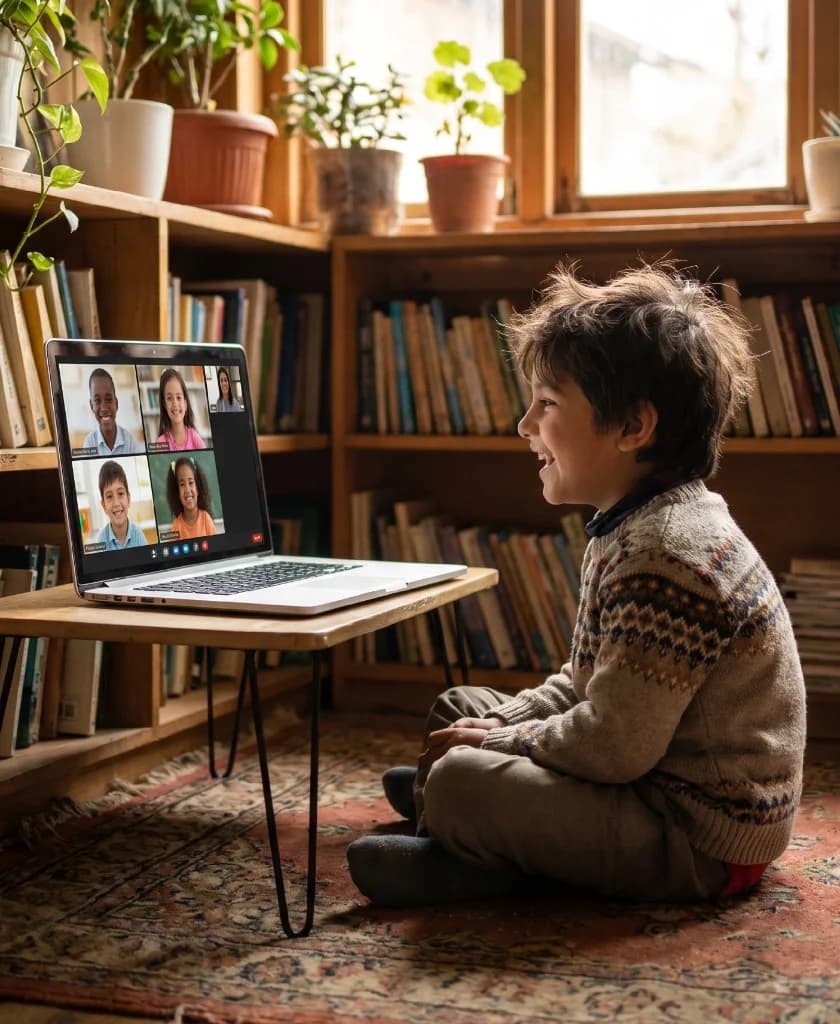
There is a sweet spot between private tutoring and a 30-student weekend class. Six to eight is it.
Private tuition is expensive, hard to vet, and often inconsistent. Mass weekend classes are overcrowded and impersonal. Children — especially those still building confidence — rarely thrive in either extreme. There is a sweet spot between the two, and after teaching thousands of live online lessons we are convinced of where it sits: six to eight students.
The Problem With Both Extremes
One-on-one: intensity without energy
Private tutoring sounds ideal — undivided attention, a pace set entirely by your child. In practice, many children find it draining. There is nowhere to hide while thinking, no peer to take a turn while they gather courage, and no one their own age making the same mistakes. The lesson's entire social weight rests on a child's shoulders. Costs are also punishing: quality private tutors charge two to four times the per-session price of a small group, which usually means fewer sessions and slower progress overall.
Large classes: energy without attention
The traditional weekend school model — twenty to forty children in a hall — has served communities for decades, and its social value is real. But instructionally, the arithmetic is brutal. In a ninety-minute class of thirty, each child might recite for ninety seconds. Mistakes go uncorrected for weeks. Quiet children disappear entirely. Parents often discover only at year's end how little was actually retained.
What Six to Eight Makes Possible
- Every child is known by name. The tutor knows exactly where each student is stuck, what they mastered last month, and what they need next.
- Regular speaking time. In a group of seven, every child recites, answers, and asks — several times per lesson. For language and Quran learning, speaking turns are not a bonus; they are the mechanism.
- Peer learning. Children absorb corrections addressed to classmates. Hearing a peer work through the same Tajweed mistake teaches almost as much as making it yourself — without the sting.
- Gentle accountability. Knowing the same six faces will be there on Thursday builds a commitment that no recorded course and few private arrangements can match.
- Healthy pace. The tutor can progress the whole group together, stretching the quick and supporting the careful, without anyone being left behind or held back for long.
The Confidence Effect
The strongest argument for small groups is what they do for hesitant children. A shy child in a class of thirty stays silent for a year. The same child one-on-one feels interrogated. In a group of six, something shifts: they watch two classmates answer first, borrow their courage, and try. Small wins in front of a small, friendly audience compound into a child who volunteers answers — a transformation parents notice at the dinner table, not just in class.
What Changes for Parents
- Lower fees than 1-on-1 with most of the same individual attention — small groups typically cost a fraction of private rates per session.
- Children stay engaged because the energy of the group keeps lessons alive; attendance stops being a battle.
- Clearer progress reports because the tutor genuinely knows the cohort — feedback describes your actual child, not a generic rubric.
What to Look For in a Small-Group Programme
- A hard cap, honestly enforced. "Small group" should mean a number, not a marketing phrase. Ask what happens when demand grows — the right answer is a new group, not a bigger one.
- Level-based placement. Six students only works if they are genuinely peers. A placement check before joining matters more than most parents realise.
- Qualified tutors. Group teaching is a skill. Ijaza certification or formal teaching credentials tell you the tutor can use those speaking turns well.
- Recordings and reporting. Small groups plus recorded lessons plus regular progress updates give you visibility that even private tutoring rarely provides.
How Minhaj Kids Applies This
Every Minhaj Kids class — Quran, Arabic, and Islamic Studies — runs as a live group of six to eight children, matched by level after a short placement check and taught by ijaza-certified and formally qualified tutors. Sessions are recorded for home review, and parents receive monthly progress updates. If you want to see the small-group difference for yourself, the first class is free — no payment card required.
