
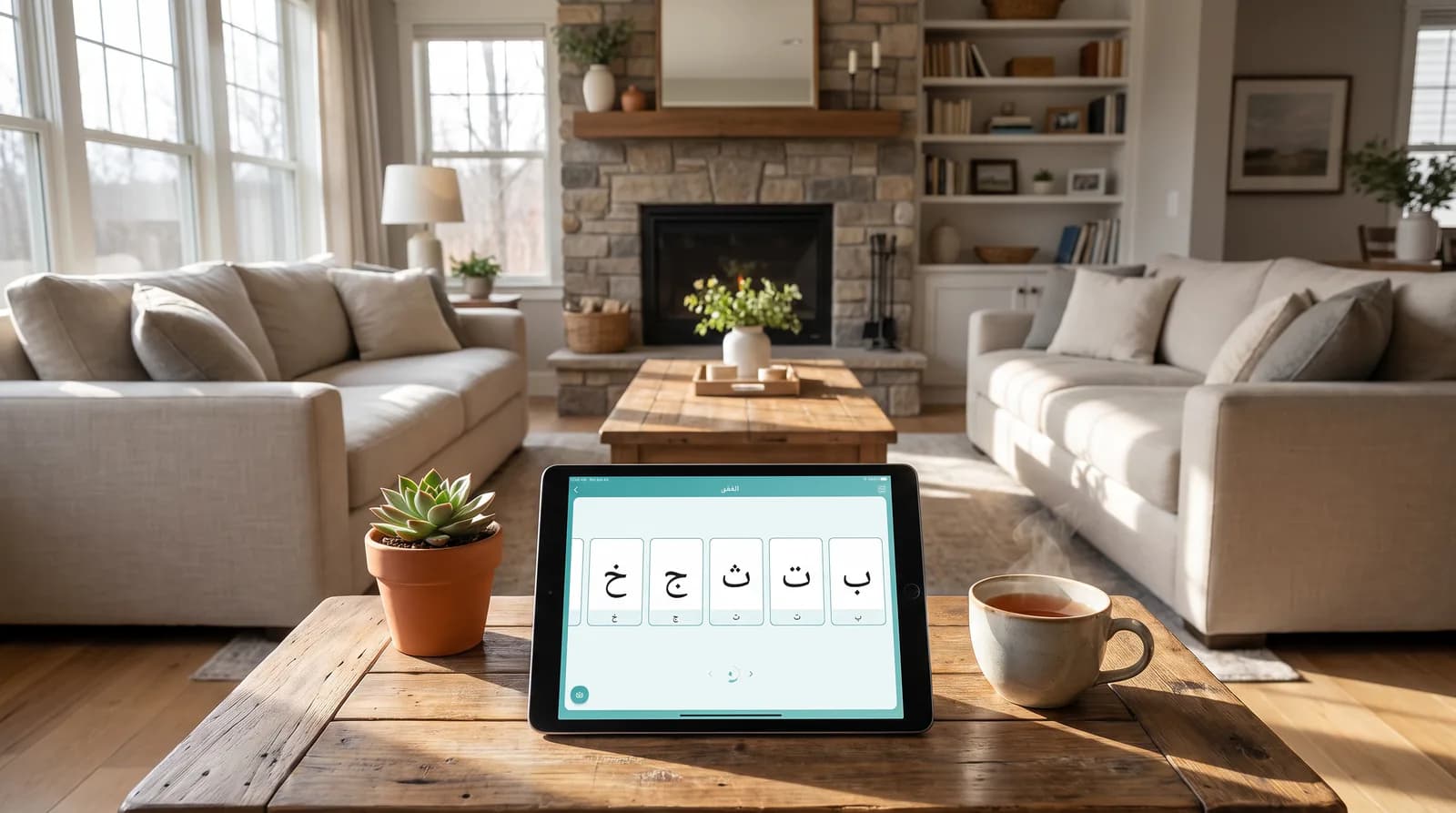
Discover 2026 predictions for the future of Islamic education in the West. Learn how Muslim parents can practically prepare using digital and hybrid models.
Something profound is happening in Muslim households across London, Toronto, Chicago, and Sydney. Parents are no longer asking whether their children can receive a serious Islamic education in the West—they are asking how to do it without sacrificing their child's sanity, their family's budget, or their own sanity. The old answers (pack them off to a weekend maktab, hope for the best) are collapsing under the weight of evidence. The new answers are digital, personal, and surprisingly affordable.
This guide is not a think-piece about the future. It is a practical blueprint for the parent who needs to make a decision this month, not in five years. We will look at the economic, pedagogical, and spiritual realities shaping 2026, and we will show you exactly how to future-proof your child's Deen with a structured 1:1 online model that starts at $39 per month.
The Shifting Landscape of Islamic Education in the West
For decades, the default option for diaspora families was the weekend maktab: two or three hours at the local mosque on Saturday or Sunday, often taught by well-meaning volunteers who were not trained teachers. This model served a purpose when options were scarce. But the research is now clear that it is not meeting the needs of a generation raised in Western schools, saturated with digital media, and facing complex identity questions.
A 2025 systematic review in MDPI on Islamic schooling in the cultural West found that parents consistently report three barriers to traditional weekend schools: limited resources, inconsistent teaching quality, and outdated pedagogies that fail to engage children who are used to interactive learning. The same review noted that full-time Islamic schools remain the ideal for many parents, but are economically out of reach for the majority.
Meanwhile, the digital shift is accelerating. A 2025 report from Quranic Values on the future of Islamic education in the digital age found that parents are increasingly turning to online platforms that offer qualified teachers, flexible scheduling, and personalized attention. The report emphasized that technology is democratizing access to scholars who would otherwise be geographically inaccessible.
But not all online learning is equal. The critical distinction—one that most articles gloss over—is between passive pre-recorded videos and live, structured 1:1 sessions. A child watching a YouTube video on Tajweed (تجويد) is not the same as a child sitting with a qualified tutor who corrects their pronunciation in real time, answers their questions, and adapts the lesson to their pace. The future belongs to the latter.
Economic Realities: Why Hybrid and Online Models are Growing
Let's talk numbers, because the economic barrier is the single biggest reason Western Muslim families are not accessing quality Islamic education. Full-time Islamic private schools in the USA and Canada typically cost between $8,000 and $15,000 per year per child. There is no direct state funding for religious education in the United States, and in Canada the situation varies by province but is generally unfavorable. For a family with three children, that is a mortgage-sized commitment.
According to a 2026 report from ISPU comparing Islamic education in Canada and the USA, the affordability crisis is driving families toward hybrid and online models. The report noted that even families who can afford full-time Islamic school often find that the quality of secular education does not match what they could get in a good public or charter school, forcing a trade-off that many are unwilling to make.
Online 1:1 learning bridges this gap. At Minhaj Kids, the Al-Azhar aligned curriculum starts at $39 per month for the Essentials plan (one 30-minute session per week), $79 per month for the Focused plan (two sessions per week), and $109 per month for the Minhaj Path plan (three sessions per week). Compare that to $1,000+ per month for private school, and you see why this is not a compromise—it is a strategic reallocation of resources.
For families who want to explore the full cost breakdown, see our guide on cost of Islamic education and overcoming economic barriers. You can also view our transparent fees page for current pricing.
The Rise of Personalized, One-to-One Digital Learning
The most important pedagogical shift in Islamic education is the move from group instruction to personalized 1:1 learning. In a traditional weekend maktab, one teacher might have 15 to 30 children of varying ages and abilities. The pace is set by the middle, which means advanced students are bored and struggling students are lost. This is not the teacher's fault; it is a structural limitation.
One-to-one online sessions solve this. At Minhaj Kids, every session is 30 minutes of live, focused instruction with a qualified tutor. The tutor can slow down for a child struggling with Arabic letters, or accelerate for a child ready to memorize longer surahs. The lesson is tailored to the child's level, learning style, and even their mood that day.
This personalization matters especially for diaspora children who are navigating two cultural worlds. A tutor who understands the child's context can address identity questions as they arise, weaving them into the lesson rather than treating them as distractions. Our article on Muslim youth identity and faith commitment explores this dynamic in depth.
Another overlooked advantage of live 1:1 sessions is the recorded session feature. At Minhaj Kids, every live session is recorded and made available to parents. This is not surveillance; it is a safety and review tool. Parents can watch the session later with their child, reinforcing the lesson and ensuring that the content aligns with their family's values. For working parents who cannot sit in on every session, this is invaluable. It also allows the child to review difficult concepts before the next session, turning a single 30-minute lesson into a week of reinforced learning.
Integrating Digital Wellbeing with Islamic Tarbiyah
The same devices that deliver Islamic education can also deliver harmful content. This is the paradox of digital parenting. A 2025 study in West Science Islamic Studies on digital wellbeing and social media ethics among Muslim youth found that while technology exposes children to ethical challenges, it also offers opportunities for positive identity formation when guided by intentional Islamic education.
The key is not to demonize technology but to frame it within Islamic Tarbiyah (تربية). This means teaching children that their online behavior is part of their Deen, not separate from it. Honesty in a group chat, respect for parents in a video call, guarding the gaze on social media—these are all extensions of Islamic character.
Minhaj Kids integrates digital wellbeing into its curriculum. Tutors discuss online ethics, screen-time balance, and the Islamic concept of amanah (trust) as it applies to digital spaces. This is not an add-on; it is woven into the fabric of the lessons. For a deeper dive, see our guide on screen-based Islamic learning: benefits, risks, and guidelines.
Parents can also use the recorded sessions as a springboard for family discussions about digital habits. After watching a session on honesty, a parent might ask, "How does this apply to what you post online?" This turns Islamic education into a family activity rather than a chore.
Overcoming the Limitations of Traditional Weekend Maktabs
Weekend maktabs are not failing because the people running them are incompetent. They are failing because the model is structurally under-resourced. A 2025 study in MUMTAZ: Jurnal Pendidikan Agama Islam on multiculturalism and Islamic education in Western contexts found that weekend schools often lack qualified teachers, consistent curricula, and the ability to address the complex identity needs of diaspora children.
The most common complaints from parents include:
- Teachers who are not fluent in English, making it hard for children to ask questions.
- Large class sizes that prevent individual attention.
- Inconsistent attendance and discipline.
- Curricula that focus on rote memorization without understanding.
- No mechanism for parent-teacher communication or progress tracking.
Online 1:1 learning addresses each of these. Tutors are fluent in English (and often Arabic), class size is one, attendance is enforced by the parent's calendar, curricula are structured and progressive, and parents receive regular progress reports. For a detailed comparison, see our article on comparing weekend mosque, full-time Islamic school, and online Quran and Arabic literacy.
This is not to say that weekend maktabs are worthless. They provide community and a physical space for Muslim children to meet. But they should not be the primary source of Islamic education. A hybrid model—weekend maktab for socialization, online 1:1 for actual learning—is the most effective approach for many families.
Practical Steps to Future-Proof Your Child's Deen
Predictions are useless without action. Here is a step-by-step plan for the next 12 months.
1. Assess Your Child's Current Level
Before choosing any program, know where your child stands. Can they read Arabic letters? Do they know the basic rules of Tajweed? Can they pray independently? Our guide on measuring Islamic education progress offers a practical assessment framework.
2. Choose a Structured 1:1 Online Program
Look for live sessions, qualified tutors, a structured curriculum, and recorded sessions for review. Avoid passive video platforms. Minhaj Kids offers three plans to match your schedule and budget: Essentials (1 session/week), Focused (2 sessions/week), and Minhaj Path (3 sessions/week). All plans include 30-minute live 1:1 sessions, recorded for your review. Explore our Quran program, Arabic program, and Islamic Studies program.
3. Align Sessions with Western School Terms
Cognitive load is real. Diaspora children are already managing a full school day, homework, and extracurriculars. Adding a heavy Islamic studies load on top can lead to burnout. The solution is short, consistent sessions that align with the Western school calendar. Two 30-minute sessions per week during term time, with a lighter schedule during holidays, is more sustainable than a three-hour weekend marathon. Our article on parental burnout and enrichment reset explains why less is often more.
4. Integrate Digital Wellbeing
Use the recorded sessions to have family conversations about online ethics. Set clear screen-time rules that apply to everyone, including parents. Model the behavior you want to see. For more, see our guide on Muslim teens, social media, and peer pressure.
5. Track Progress Beyond Grades
Memorization is not the only measure of success. Look for changes in character, prayer habits, and curiosity about the Deen. Our article on holistic Tarbiyah assessment offers a more meaningful framework.
6. Build a Support Network
You are not alone. Connect with other Muslim parents who are navigating the same challenges. Our longitudinal Tarbiyah support guide and revert Muslim families support guide are good starting points.
How Minhaj Kids Supports the Modern Western Muslim Family
Minhaj Kids was built for this exact moment. We are not a weekend school that added Zoom during the pandemic. We are a purpose-built online learning platform designed for Western Muslim families who want quality, flexibility, and affordability.
Here is what sets us apart:
- Live 1:1 sessions: Every session is 30 minutes of live, personalized instruction with a qualified tutor. No pre-recorded videos.
- Al-Azhar aligned curriculum: Our curriculum is rigorous, structured, and rooted in traditional Islamic scholarship.
- Flexible scheduling: Choose 1, 2, or 3 sessions per week. Align with your school term.
- Recorded sessions: Every live session is recorded for parent-supervised review.
- Affordable pricing: Plans start at $39/month. No hidden fees.
- Qualified tutors: All tutors are vetted, trained, and fluent in English.
We also provide resources for parents on vetting online Islamic tutors and tutor quality and safeguarding, because we believe informed parents make the best decisions.
If you are ready to future-proof your child's Deen, start by reviewing our fees and plans. You can also learn more about our mission or contact us with questions. For a broader overview of trends, see our article on the state of Islamic education in the Western diaspora 2026.
The future of Islamic education in the West is not a distant abstraction. It is a decision you make today. Choose structured, personalized, affordable learning. Choose Minhaj Kids.
References
- The Future of Islamic Education in the Digital Age — Quranic Values, 2025.
- Islamic Education in North America: Canada and USA Compared — ISPU, 2026.
- The Role of Islamic Education in Building Digital Wellbeing and Social Media Ethics among Muslim Youth — West Science Islamic Studies, 2025.
- Islamic Schooling in the Cultural West: A Systematic Review of the Issues Concerning School Choice — MDPI, 2018.
- Multiculturalism and Islamic Education in Western Contexts: Navigating Identity, Faith, and Citizenship — MUMTAZ : Jurnal Pendidikan Agama Islam, 2025.