
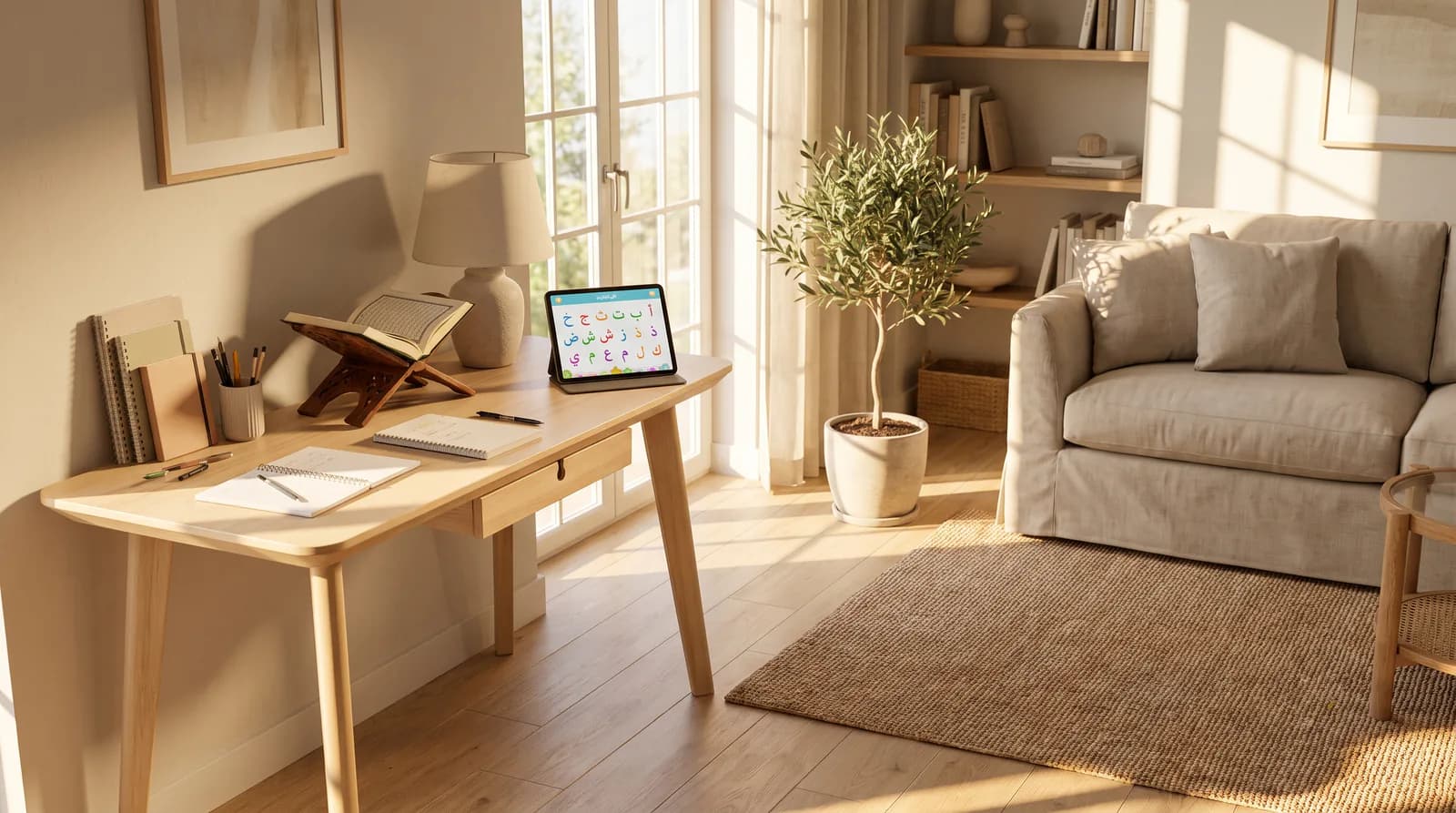
Explore 2026 trends in Islamic education for Muslim children in the West. Learn about gaps in weekend schools and how online learning supports diaspora.
The 2026 Landscape: How Islamic Education is Evolving in the West
In 2026, the conversation around Islamic education for Muslim children in the West has shifted dramatically. The once-dominant 'public vs. Islamic school' binary no longer captures the reality most families face. Instead, parents are seeking practical, high-quality, and structured solutions that fit into their busy lives—without the burnout of long commutes or the financial strain of full-time private schooling. This article explores the key trends, persistent gaps, and actionable strategies for families navigating this landscape.
The dual identity challenge of raising Muslim kids in Western societies remains central, but the response has evolved. As outlined in a systematic review of Islamic schooling in the cultural West, parents are increasingly concerned with holistic development that integrates secular academic success with strong Islamic identity (MDPI, 2018). Yet, the traditional weekend school model—often volunteer-run and under-resourced—is failing to meet these needs. A 2025 guide on About Islam notes that parents are 'caught in a quandary,' wanting structured religious education but lacking accessible options (About Islam, 2025). This is where the gap lies—and where innovative solutions are emerging.
Parents today are not just looking for a class; they want a system that respects their schedule, their child's emotional well-being, and the rigour of an authentic Islamic curriculum. The trend is clear: move away from fragmented weekend programs toward professionalised online learning that brings the classroom home.
The Limitations of the Traditional Weekend School Model
For decades, weekend Islamic schools were the default for diaspora families. However, by 2026, the cracks are impossible to ignore. Logistical burnout is a primary driver: parents spend hours driving children to and from under-resourced facilities, often on their only day off. As discussed in our post on parental burnout from Islamic enrichment overscheduling, this model adds stress rather than spiritual nourishment.
Beyond logistics, quality is inconsistent. Many weekend schools rely on volunteer teachers with varying levels of training, leading to uneven student engagement and outcomes. Children often disengage when lessons are delivered in uninspired formats. The Brookings Institution has noted that Islamic religious education in the West suffers from a lack of standardised curricula and professional development (Brookings, 2015). This is particularly problematic for diaspora kids who need engaging, age-appropriate instruction to build a lasting connection to their faith.
Furthermore, weekend schools rarely offer the structured progression that families need. Without clear milestones and regular feedback, parents are left guessing whether their child is actually learning. This is why many are turning to more accountable options, such as structured online Quran programs that provide recorded sessions and progress tracking.
Balancing Secular Schooling with Meaningful Deen Enrichment
One of the biggest challenges for Western Muslim families is fitting Islamic education into an already packed schedule of secular school, extracurriculars, and family time. The goal is not to add more hours but to integrate learning seamlessly. A key insight from research is that the home environment remains the primary foundation for instilling Islamic values and identity (ERIC, 2021). Parents must be intentional about creating routines that prioritise deen without overwhelming the child.
Practical steps include setting aside 15-20 minutes daily for Quran reading or Arabic practice, using visual schedules, and celebrating small milestones. Our guide on building a consistent Quran routine offers concrete strategies. The goal is consistency over intensity—a principle that professional online programs are designed to support.
Importantly, parents should view Islamic education not as a separate subject but as an integrated part of life. This means choosing resources that align with the child's secular learning style and schedule. For example, live online classes that are recorded allow children to learn at their own pace without missing out on other activities. This flexibility is a game-changer for families who previously felt forced to choose between secular success and religious depth.
The Shift to Professionalised Online Learning for Diaspora Kids
The most significant trend in 2026 is the rise of professionalised online Islamic education. Unlike the early days of pandemic-era Zoom classes, today's offerings are carefully designed with pedagogy, safeguarding, and curriculum standards. Parents are no longer satisfied with ad-hoc tutoring; they demand structured programs with certified teachers and measurable outcomes.
This shift addresses two critical gaps: accessibility and quality. Online learning eliminates geography and cost barriers, making high-quality instruction available to families in rural areas or those who cannot afford full-time Islamic schools. As Al Jumuah Magazine reports, parents often choose Islamic day schools for the community and structure they provide (Al Jumuah, 2024). However, when those schools are out of reach, online programs can replicate many of those benefits—especially when they include live, small-group interaction.
At Minhaj Kids, we've seen firsthand how a structured online program can transform a child's relationship with their faith. Our Islamic studies curriculum is designed specifically for diaspora children, covering Aqeedah, Fiqh, Seerah, and Akhlaq in an engaging, age-appropriate manner. Every session is recorded, so families can review and reinforce learning at home.
Why Small-Group Peer Learning is Crucial for Muslim Identity
One of the most overlooked aspects of Islamic education is peer learning. Many parents assume that 1-on-1 tutoring is the most effective, but for diaspora kids who often feel isolated in their faith, group learning is invaluable. Small groups of 3-5 students create a sense of community and belonging that solo tutoring cannot replicate.
In a group setting, children see that they are not alone in their questions and struggles. They learn from each other's perspectives and develop confidence in expressing their faith. This is especially important for teens navigating peer pressure and identity questions. Our post on why small groups work better dives into the research and practical benefits.
Moreover, small-group classes mirror the social dynamics of a traditional classroom without the drawbacks of large, impersonal settings. Teachers can give individual attention while fostering collaborative learning. For shy children, this can be a safe space to participate, as discussed in helping shy children participate online. The result is a richer educational experience that builds both knowledge and community.
Quality Control: Credentials, Safeguarding, and Curriculum
As the online Islamic education market grows, so does the need for quality control. Parents must vet providers for teacher credentials, curriculum alignment, and digital safeguarding. Unfortunately, the market is unregulated, and many programs lack transparency. A key concern is the use of Ijaza-certified teachers for Quran instruction—a certification that ensures the teacher has a direct chain of transmission back to the Prophet (peace be upon him).
At Minhaj Kids, all Quran and Arabic teachers hold Ijaza certification, and our curriculum is aligned with Al-Azhar standards. This ensures that children receive authentic, structured instruction in Tajweed and Arabic. For Islamic studies, we follow a balanced curriculum that respects the diversity of the diaspora community while remaining rooted in orthodox scholarship. Parents can learn more about our approach on our about page.
Safeguarding is equally critical. Live classes are recorded, and all teachers undergo background checks. We also provide guidance on choosing a quality online tutor to help parents make informed decisions. In a world where online risks are real, protecting children is non-negotiable.
How Minhaj Kids Supports Western Muslim Families
We built Minhaj Kids to address the exact challenges outlined above. Our live, small-group online classes are designed for children aged 5–14 in the UK, USA, Canada, Australia, and Ireland. We offer Quran, Arabic, and Islamic Studies programs that fit seamlessly into your family's routine. Classes are scheduled around school hours, and all sessions are recorded for later review.
Our unique value lies in combining Al-Azhar aligned curricula with the flexibility of online learning. We understand that diaspora families need more than just content—they need structure, community, and support. That's why we provide regular progress updates and a dedicated parent portal. And because we believe in removing barriers, we offer a free trial with no payment card required—just visit our fees page to get started.
We also invest in resources that empower parents. From guides on integrating secular and deen education to articles on youth identity and faith commitment, our blog is a hub for actionable advice. We believe that informed parents are the best teachers, and we're here to support you every step of the way.
If you're ready to move beyond the old debates and find a solution that works for your family, we invite you to try Minhaj Kids. Start your free trial today—no card required.
References
- Islamic Schooling in the Cultural West: A Systematic Review of the Issues Concerning School Choice — MDPI, 2018.
- The Education Quandary - A Guide for Parents in the West — About Islam, 2025.
- Islamic religious education in Europe and the United States — Brookings Institution, 2015.
- Why Parents Choose Islamic Day Schools — Al Jumuah Magazine, 2024.
- Role of Parental Believes and Focus to Improve the Quality of Islamic Schooling in the Western World — ERIC, 2021.