
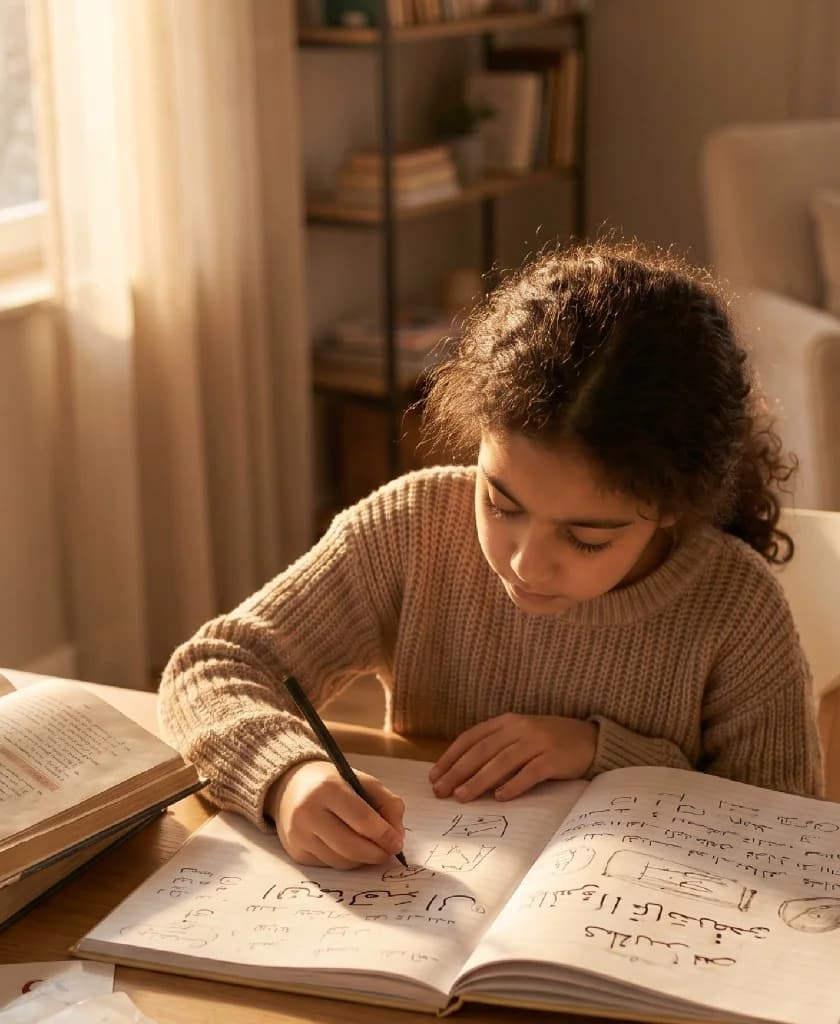
How small, consistent steps with Quran can shape a child's heart without turning learning into a chore.
Raising a child on the Quran is not about pressure. It is about presence. A child who hears recitation gently woven into the day grows up with the Book of Allah feeling familiar, warm, and welcoming — not like a subject to be tested on, but like a companion they have always known.
Many parents in the UK, USA, Canada, Australia, and Ireland carry a quiet worry: how do I give my child a real connection to the Quran when the world around them speaks a different language — literally and culturally? The answer is rarely more hours. It is better rhythm, warmer associations, and the right support.
The Rhythm Matters More Than the Hours
Twenty focused minutes, four days a week, with a qualified tutor and clear goals will outperform an unstructured weekend hour every time. Consistency builds two things at once: memory and identity. The child who touches the Quran a little every day starts to see recitation as part of who they are, not an event that happens to them on Saturdays.
Think of it the way you think of reading in English. No school teaches literacy in one weekly block. Little and often wins — the same is true of Quran.
Three Habits That Change Everything
- Daily listening. Play recitation softly during quiet moments — breakfast, the drive to school, before bed. Your child internalises tone, rhythm, and pronunciation effortlessly, long before they can explain a single rule of Tajweed.
- Short reviews. Five minutes of revision after a lesson locks in far more than an hour of cramming days later. Ask your child to recite the last few lines they learned while you cook or fold laundry. Keep it light.
- Celebrating effort, not perfection. Praise the attempt, the consistency, and the courage to try — not just the flawless recitation. Children who feel safe making mistakes recite more, correct faster, and stay in love with the process.
What This Looks Like at Different Ages
Ages 5–7: Familiarity first
At this age the goal is warmth. Short surahs, lots of repetition, plenty of praise. Letters and sounds matter more than volume memorised. If your child associates Quran time with your undivided attention and a smile, you have already won the decade.
Ages 8–11: Structure and momentum
Children this age thrive on visible progress. A structured, level-based programme — where they can see themselves moving from one stage to the next — turns memorisation into something they own. This is also the right window to build correct Tajweed habits, because mistakes that settle in now take years to undo later.
Ages 12–14: Meaning and ownership
Teenagers need to know why. Pair recitation with short conversations about what the verses mean and how they answer the questions your teen is quietly asking at school. A teen who finds their own questions answered in the Quran does not need to be reminded to review it.
The Mistakes That Push Children Away
- Making the Quran a punishment. "Go read Quran" should never be the consequence of misbehaviour. It teaches the heart the wrong association.
- Comparing siblings or cousins. Every child memorises at a different pace. Comparison converts a spiritual journey into a competition most children quietly decide to quit.
- Chasing juz counts over connection. A child who memorised five juz and resents them is in a worse place than a child who knows one juz and loves it.
- Outsourcing without involvement. Even the best tutor cannot replace a parent who listens to two minutes of recitation with genuine delight.
Childhood and Quran Are Not Competitors
A childhood built on the Quran still has football, sleepovers, silly jokes, and cartoons in it. In fact, it should. Play is not the enemy of deen — burnout is. When Quran learning is short, structured, and warm, it leaves plenty of room for a full childhood while quietly shaping the child's heart underneath it all.
How Minhaj Kids Can Help
Minhaj Kids was built for exactly this balance: live, small-group Quran classes of six to eight children, taught by ijaza-certified tutors who specialise in children growing up in the West. Lessons are short and consistent, every session is recorded so your child can review at home, and you receive monthly progress updates so you always know where they stand. The first class is completely free — no payment card required — so you can see whether the rhythm suits your family before committing to anything.
