
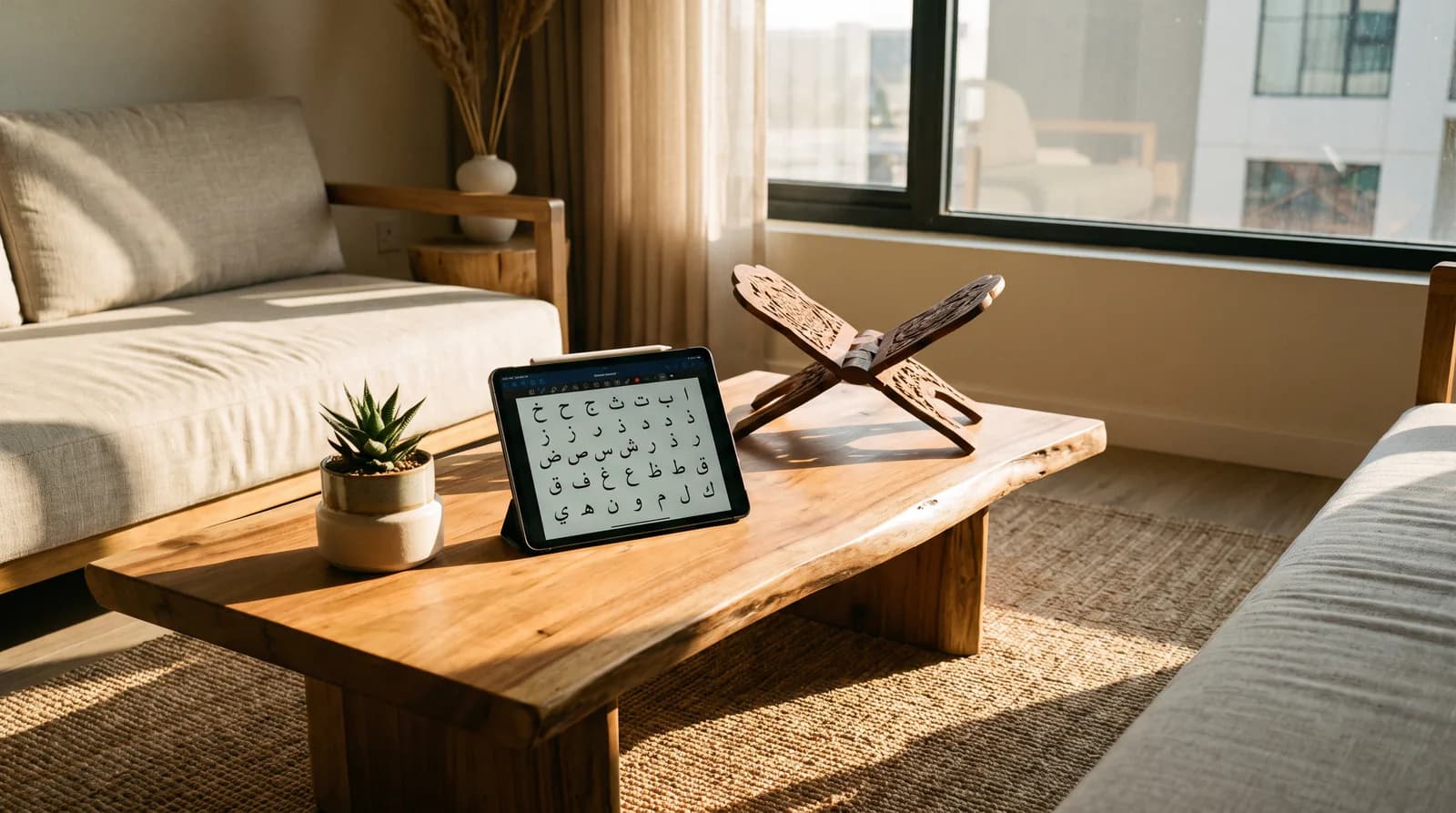
2026 guide to Islamic education for Muslim children in the West: schooling trends, Tarbiyah gaps, and practical hybrid solutions for diaspora parents.
Muslim families across the UK, USA, Canada, Australia, and Ireland are navigating a schooling landscape that looks nothing like it did a decade ago. With rising Islamophobia, shifting immigration patterns, and the permanent normalization of digital learning, the question is no longer whether to supplement your child's Islamic education—but how to do it without burning out your family or sacrificing academic priorities.
This guide synthesizes 2026 data on Muslim schooling trends, identifies the gaps that weekend maktabs and full-time Islamic schools still struggle to fill, and offers a practical, hybrid solution: structured, 1:1 online Islamic education that fits real diaspora lives.
The 2026 Landscape of Islamic Education in the West
The majority of Western Muslim children attend public or secular private schools. According to the Institute for Social Policy and Understanding (ISPU), roughly 72% of American Muslim families send their children to public schools, 25% use full-time Islamic schools, and 6% homeschool. This distribution has remained relatively stable, but the supplementary education market around it has exploded.
Parents today are not just looking for Quran memorization. They want Tarbiyah (تربية)—holistic character development rooted in Islamic values—that helps their children navigate peer pressure, identity questions, and the occasional hostility of secular school environments. As one 2026 study in Taylor & Francis notes, Muslim parental school choice is increasingly a negotiation between religious identity and social belonging, not a simple binary of public vs. Islamic school.
Meanwhile, the digital shift has permanently changed what's possible. Live online Islamic classes now connect families in rural Alberta or suburban Dublin to Ijaza-certified tutors who would never be available locally. The question for parents is no longer access—it's quality, structure, and fit.
Where Are Muslim Children Learning Today?
Let's break down the actual learning hours. A child in public school might get 30 minutes of Islamic studies at a weekend maktab, plus whatever happens at home. That's roughly 25–30 hours per year. Compare that to the 900+ hours of secular instruction they receive. The math is stark.
Full-time Islamic schools offer more integrated time, but they are not accessible to everyone. They cluster in major metropolitan areas, often have long waitlists, and charge tuition that can exceed $10,000 per year. For many families—especially single-parent households, recent immigrants, or those in areas without a critical mass of Muslim students—full-time Islamic school is simply not an option.
Homeschooling, while growing, remains a minority choice and requires a level of parental time and expertise that most working families cannot sustain.
That leaves supplementary education: weekend schools, after-school maktabs, and online classes. And here's where the quality gap becomes glaring.
The Hidden Crisis: Identity, Peer Pressure, and Bullying
Nearly half (48%) of Muslim families report that their K-12 children have experienced religious-based bullying, according to ISPU research. This is not a minor statistic. It means that for many children, the secular school environment is not neutral—it's actively hostile at times.
Bullying doesn't just hurt feelings. It erodes faith. When a child is mocked for praying, fasting, or wearing hijab, and then receives only a few hours of Islamic instruction per week, the math of identity formation tilts against them. They need a counterweight: a space where their faith is normalized, celebrated, and intellectually engaging.
This is where Tarbiyah-focused education becomes urgent. It's not about memorizing more verses. It's about building a resilient Muslim identity that can withstand external pressure. As we've explored in our guide on Muslim youth identity and faith commitment, the protective factors are consistent: strong mentorship, peer community, and structured learning that connects Islamic knowledge to daily life.
Why Traditional Weekend Schools Are Struggling
Weekend Islamic schools—often run out of mosques or community centers—have been the backbone of supplementary education for decades. But they face systemic challenges that have only worsened since 2020.
- Limited instructional hours: Two to three hours per week, often with large class sizes, means minimal individual attention.
- Volunteer teacher burnout: Many teachers are unpaid or minimally compensated, leading to high turnover and inconsistent quality.
- Curriculum relevance: Materials are often imported from abroad or decades old, failing to resonate with Western-born youth who navigate a different cultural context.
- Rote learning over Tarbiyah: The focus is frequently on memorization and completion of textbooks rather than character formation and critical thinking.
ISPU's 2017 study on weekend Islamic schools highlighted many of these issues, and little has changed at scale. Parents report frustration with the lack of structured progression, the absence of individualized attention, and the difficulty of fitting weekend classes around sports, family obligations, and rest.
For a deeper comparison, see our article on comparing weekend mosque, full-time Islamic school, and online Quran and Arabic literacy.
The Shift Toward Structured Online Islamic Learning
The pandemic accelerated a trend that was already underway: the migration of supplementary Islamic education to online platforms. But not all online classes are created equal. The early emergency remote teaching was often chaotic—large Zoom calls, disengaged students, and overwhelmed teachers.
What's emerging in 2026 is something more mature: structured, 1:1 live online classes designed specifically for diaspora families. Platforms like Minhaj Kids offer private 30-minute sessions with Ijaza-certified tutors, tailored to the Western context and accommodating local time zones and school terms.
Here's why this model addresses the gaps that weekend schools cannot:
- Personalized attention: In a 1:1 setting, the tutor can adapt pace, content, and teaching style to the individual child. No hiding in the back of a crowded classroom.
- Flexible scheduling: Sessions can be booked around school terms, extracurricular activities, and family holidays. Recorded sessions allow review between classes.
- Qualified tutors: Ijaza-certified tutors bring both traditional credentials and an understanding of Western youth culture.
- Structured progression: Clear learning pathways in Quran, Arabic, and Islamic Studies, with regular assessments that go beyond grades.
- Accessibility: Starting at $39/month, with a free trial class bookable via the Book a free trial without a payment card. Complete beginners are welcome.
This hybrid model doesn't replace the mosque community or the local maktab. It fills the gap that many families feel acutely: the need for consistent, high-quality, individualized Islamic education that fits their actual lives.
For families considering online learning, our guide on online Islamic education and local community ties explores how to balance digital learning with in-person connection.
How to Choose the Right Educational Model for Your Child
There is no one-size-fits-all answer. The right model depends on your child's age, learning style, your family's schedule, and your local community resources. Here's a practical framework:
1. Assess Your Child's Needs
Does your child thrive in group settings or need individual attention? Are they a complete beginner or do they have some foundation? Do they struggle with confidence in large classes? Our article on helping shy children participate in online Quran classes offers specific strategies.
2. Evaluate Your Local Options
If you have a well-run weekend school nearby, it can provide valuable peer community. But be honest about its limitations. If your child is not progressing or is bored, it may be time to supplement.
3. Consider a Hybrid Approach
Many families combine a local weekend maktab for socialization with 1:1 online classes for structured learning. This gives children both community and personalized instruction.
4. Prioritize Tarbiyah, Not Just Taleem
Taleem (تعليم) is instruction—the transmission of knowledge. Tarbiyah is cultivation—the holistic development of character, identity, and spiritual awareness. A good program should do both. Ask potential providers how they integrate character development into their curriculum. Our article on holistic Tarbiyah assessment explains what to look for.
5. Check the Practicalities
Does the schedule work for your family? Are sessions recorded for review? What happens if you miss a class? Is there a clear progression path? Does the provider accommodate your time zone and school calendar?
6. Vet the Tutors
Credentials matter, but so does teaching ability. Look for Ijaza certification in Quran and Arabic, but also ask about experience with Western Muslim children. Our guide on vetting online Islamic tutors provides a checklist.
7. Start with a Trial
Most reputable providers offer a free or low-cost trial class. Minhaj Kids offers a free trial class bookable via the Book a free trial without a payment card. Use this to assess fit for your child.
Building a Lifelong Connection to the Deen
The goal of Islamic education is not to fill a child's head with facts or to complete a certain number of Juz. It is to nurture a lifelong relationship with Allah, His Book, and His Messenger (peace be upon him). That relationship is built through consistent, positive experiences—not through pressure or shame.
Parents play a crucial role, but they cannot do it alone. The diaspora context adds layers of complexity: cultural negotiation, minority stress, and the constant pull of secular norms. A structured, supportive educational environment can make the difference between a child who merely tolerates Islam and one who embraces it as a source of meaning and strength.
Whether you choose a local weekend school, a full-time Islamic school, homeschooling, or online 1:1 classes, the key is intentionality. Don't default to the path of least resistance. Assess, plan, and adjust as your child grows.
For families ready to explore a flexible, personalized online option, Minhaj Kids offers private 30-minute sessions with Ijaza-certified tutors, recorded for review, and designed for the Western diaspora. Complete beginners are welcome. You can Book a free trial without a payment card and see if it's the right fit for your family.
Explore our Quran program, Arabic program, and Islamic Studies program to learn more. For additional insights, browse our blog and about page.
References
- Youth - Institute for Social Policy and Understanding — ISPU, 2025.
- Weekend Islamic Schools — ISPU, 2017.
- Global Battleground or School Playground: The Bullying of America's Muslim Children — ISPU, 2011.
- Islamic Schooling in the Cultural West: A Systematic Review of the Issues Concerning School Choice — MDPI, 2018.
- Muslim parental school choice and the negotiation of religious identity and social belonging in Muslim-minority societies — Taylor & Francis, 2026.