
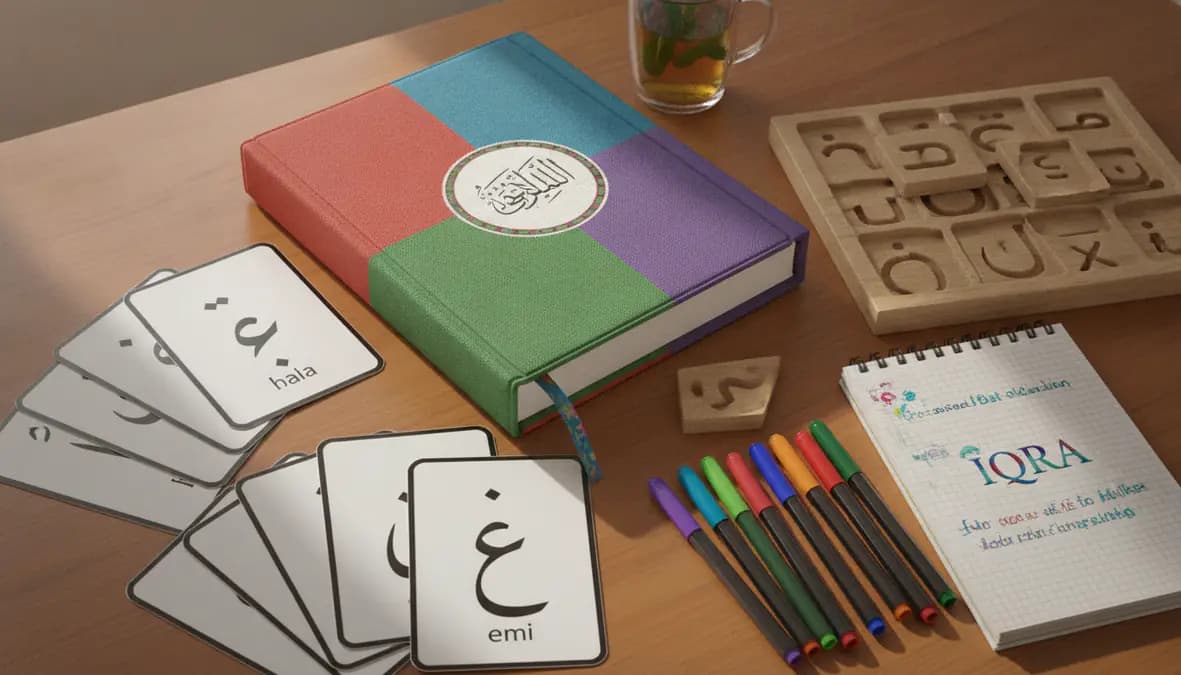
Discover how inclusive Islamic pedagogy and tailored strategies help children with learning differences thrive in Quran and Arabic. Empowering Muslim parents…
Inclusive Islamic Pedagogy: Supporting Children with Learning Differences in Quran and Arabic Classrooms
As Muslim parents in the West, we share a deep desire to see our children connect with the Quran and Arabic language. Yet for many families, this journey is met with unexpected challenges. Children with learning differences such as dyslexia, ADHD, or autism often find traditional methods overwhelming, leading to frustration, disengagement, and even a sense of spiritual inadequacy. But it doesn't have to be this way. Grounded in Islamic principles of justice and compassion, and informed by modern educational research, an inclusive approach can transform the learning experience for every child.
The Call for Inclusive Islamic Education in the West
In Western educational systems, inclusive practices have become standard, ensuring that children with diverse needs receive appropriate support. However, many Islamic supplementary schools and online programs have been slower to adapt. The result? Children with learning differences are sometimes left behind, their potential untapped. Minhaj Kids believes that every child deserves the opportunity to engage with the Quran and Arabic in a way that respects their unique learning profile. This is not merely an educational preference; it is an Islamic imperative.
Understanding Learning Differences: Dyslexia, ADHD, and More
To support children effectively, we must first understand the challenges they face.
Dyslexia in the Arabic Script
Dyslexia affects reading, writing, and spelling due to difficulties in phonological processing, letter recognition, and decoding. The Arabic script, with its connected letters and diacritical marks, can be particularly challenging. A child with dyslexia may confuse similar-looking letters (e.g., ب, ت, ث) or struggle to maintain the correct sequence. Multi-sensory approaches—engaging sight, sound, touch, and movement—have been shown to strengthen neural connections and improve literacy. A systematic review on multisensory Quranic literacy for dyslexia learners confirms that such methods significantly enhance letter recognition and reading fluency (ResearchGate, 2025).
ADHD and Attention Challenges
Children with ADHD often struggle with sustained focus, impulse control, and executive function. Sitting still for long periods, processing lengthy verbal instructions, and maintaining attention during repetitive drills can be daunting. However, they thrive with novelty, variety, and immediate feedback. Strategies such as shorter sessions, movement breaks, and interactive activities can make a world of difference. NoorQuran (2026) outlines effective techniques for teaching Quran to children with ADHD, emphasizing the importance of breaking lessons into small, manageable chunks.
Islamic Values: A Foundation for Compassionate Pedagogy
Islam places a strong emphasis on justice, compassion, and the dignity of every individual. The Prophet Muhammad (peace be upon him) said, “The best of you are those who are best to their families” (Tirmidhi), and this kindness extends to how we teach our children. Inclusive education is not a concession but a fulfillment of our Islamic duty to remove barriers and facilitate learning. Every child, regardless of their neurotype, has the right to access the Quran and Arabic in a manner that respects their needs.
Tailored Teaching Strategies for Quran and Arabic Learning
Evidence-informed pedagogy offers a range of strategies that can be adapted for Islamic education.
Differentiated Instruction
Differentiated instruction means tailoring content, process, and product to each child's readiness, interests, and learning style. For example, a visual learner might benefit from color-coded Tajweed rules, while a kinesthetic learner might learn better by tracing Arabic letters in sand. This approach is supported by research on differentiated learning in Islamic education (Al-Lubab, 2024).
Multi-Sensory Learning
Multi-sensory techniques engage multiple senses simultaneously. For Quran and Arabic, this could include:
- Color-coded Tajweed rules (visual)
- Audio-first instruction with rhythmic repetition (auditory)
- Finger-tracing letters on textured surfaces (tactile)
- Movement-based games like letter hopscotch (kinesthetic)
These methods help children with dyslexia and ADHD stay engaged and retain information better.
Shorter, Frequent Sessions & Movement Breaks
For children with ADHD, optimal focus is achieved with sessions of 10-20 minutes, interspersed with movement breaks. A quick stretch, a walk, or a simple physical activity can reset attention and reduce restlessness.
Visual Supports & Structured Routines
Clear, large typography, visual schedules, and progress charts reduce sensory overload and provide a sense of security. Predictable routines help children know what to expect, lowering anxiety and improving participation.
Positive Reinforcement
Celebrating small achievements—like correctly pronouncing a letter or memorizing a short verse—builds confidence and motivation. Praise should be specific and genuine, focusing on effort rather than outcome.
Individualized Pacing & Plans
Every child learns at their own pace. Rather than adhering to rigid timelines, educators should focus on mastery. An Individualized Learning Plan (ILP) can outline specific goals, accommodations, and strategies tailored to the child.
The Power of Small Groups and Specialized Tutors
Group size matters significantly for children with learning differences. Large classes can be overstimulating and limit individual attention. Small groups, such as the 3-5 student classes at Minhaj Kids, naturally facilitate differentiated instruction and a calmer environment. Tutors trained in special education techniques can adapt lessons on the fly, provide immediate feedback, and build strong relationships with students. Brighton School (2024) highlights the importance of small learning groups for special needs education, noting improved outcomes and social engagement.
Empowering Parents: Partnering for Your Child's Success
Parents are a child's first and most important teachers. Collaboration between home and the learning environment is essential. Here are ways parents can support their child:
- Communicate openly with tutors about your child's strengths and challenges.
- Reinforce learning at home with multi-sensory activities—use flashcards, apps, or even play Arabic letter games.
- Create a consistent routine that includes short, daily practice rather than long, infrequent sessions.
- Celebrate progress, no matter how small, and avoid comparing your child to others.
For more tips on building a consistent Quran routine, read our post on building a Quran routine for school-age children.
Minhaj Kids: Our Commitment to Every Learner
At Minhaj Kids, we are committed to inclusive Islamic education. Our small group classes, qualified tutors, and flexible curriculum are designed to meet the needs of diverse learners. We believe that every child has the right to connect with the Quran and Arabic in a way that honors their unique journey. If you are looking for a supportive environment for your child, we invite you to explore our programs.
Learn more about our Quran program, Arabic program, and Islamic studies program. For details on fees and enrollment, visit our fees page.
Together, we can ensure that no child is left behind in their spiritual and educational growth.
References
- Importance of Small Learning Groups in Special Needs Education — Brighton School, 2024.
- Teaching Quran to Children with ADHD: Strategies That Actually Work — NoorQuran, 2026.
- Multisensory Approach in Quranic Literacy for Dyslexia Learners: A Systematic Review — ResearchGate, 2025.
- The Concept of Differentiated Learning and Its Implementation in Islamic Education — Al-Lubab: Jurnal Penelitian Pendidikan dan Keagamaan Islam, 2024.
- Implementation of Inclusive Islamic Education for Children with Special Needs — Aafiyah: Jurnal Pendidikan Islam Anak Usia Dini, 2025.
- Quran Classes for Autism, ADHD & Special Needs Children — NoorKids.